The 4 Color Experiences of Light
Stop settling for ‘Grey Dim.’
Of all the categories we support, none has evolved as rapidly over the last few years as lighting. Historically, us “tech guys” handled the control systems, while the fixtures themselves were left to electricians and interior designers. Behavior was predictable: lights dimmed when you needed them to, and all was well.
But times have changed. LEDs have revolutionized the market, and modern fixtures now offer a range of options that require a keen eye for detail. Make no mistake: in 2026, lighting is a technology product.
When we kick off a new design, we start with a questionnaire to determine the “Lighting Experience” a client wants for each area of their home. In today’s Tony Tech Talk, we’re breaking down the four primary ways to experience light.

1. Static White
Every light has a “color temperature” measured in Kelvin. These ratings range from 1800K (warm/amber) to 7000K and above (cool/blue). A Static White fixture has a fixed color temperature that never changes. In North American residential projects, this is typically 2700K or 3000K.
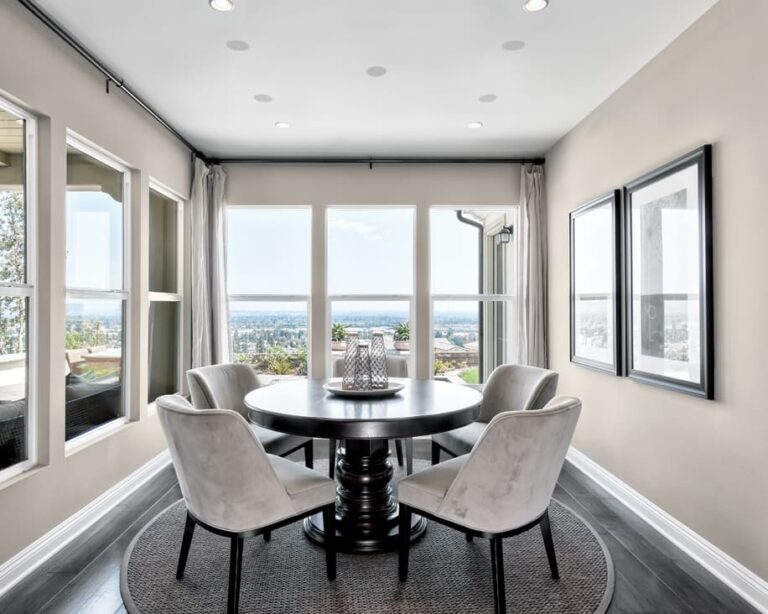
While Static White looks great at full brightness, it faces a challenge when dimmed. A 3000K light at low levels doesn’t feel cozy or candlelit; it feels “underlit.” We call this “grey dim,” and we try to avoid it in any room where ambiance is a priority. Because they are the most cost-effective and widely available, we typically recommend Static White for garages, utility rooms, and areas where dimming isn’t necessary.
2. Warm Dim
Before LEDs, we relied on incandescent and halogen bulbs. These had a unique natural behavior: as you dimmed them, the color temperature automatically shifted lower (warmer). A light that was 3000K at full power might drop to 1800K when dimmed.
Most people prefer this warmer shift at low levels because it mimics candlelight, sunrise, and sunset. We recommend Warm Dim as the baseline for any area where relaxation and atmosphere are important.
3. Tunable White
While Warm Dim is tied to the brightness level, Tunable White allows you to adjust the color temperature from warm to cool independently of the brightness. This usually offers a much broader range of temperatures.
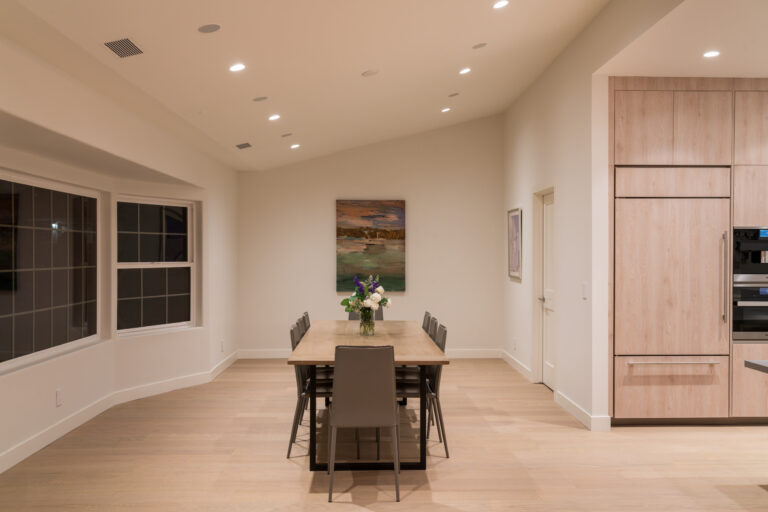
This is the gold standard for areas with lots of natural light, as it allows your interior fixtures to match the shifting color of the sun throughout the day. We tend to use Tunable White in Great Rooms, kitchens, dining rooms, and other “proud spaces” of the home.
4. Tunable Color
(Full Spectrum)
Tunable Color fixtures offer everything Tunable White does, but with the addition of Red, Green, and Blue (RGB) diodes. This allows you to mix almost any color imaginable, from vibrant saturated hues to subtle pastels.
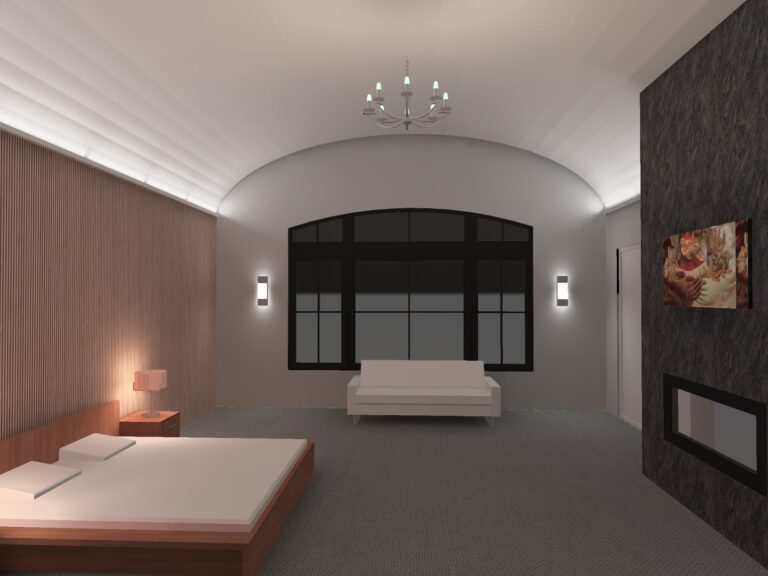
While these tend to be the most significant investment, they also make the biggest statement. They can enhance artwork, highlight architectural finishes, and completely transform a room’s vibe. We use these in “showpiece” spaces where lighting needs to have the highest possible impact.
It Takes a Plan
With so many options and control methods, it takes a professional to integrate them into a system that is both beautiful and intuitive. Lighting is often overlooked in new construction, yet it’s the single biggest factor in how a space makes you feel.
Want to see the difference for yourself? Come by our showroom! We have an excellent educational demo area where you can see all four of these light experiences in action.
Tony Curtis